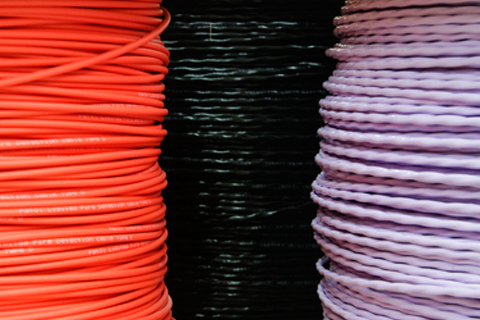
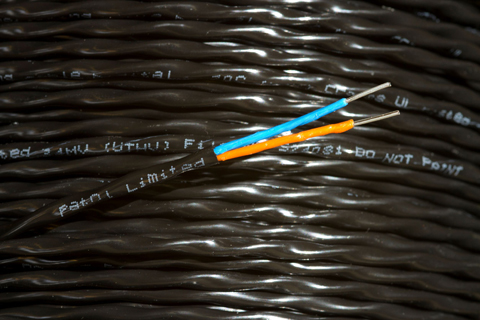
We are an Authorised Distributor for 
Linear Heat Sensing Cable (LHS Cable), also known as Linear Heat Detection Cable (LHDC), is a proven and highly reliable fire detection solution designed for environments where conventional smoke detectors fail.
Fire Knock is an authorized distributor of PATOL Limited Linear Heat Sensing Cable in India, offering genuine products, expert system design support, and fast delivery across the country.
How Linear Heat Sensing Cable Works
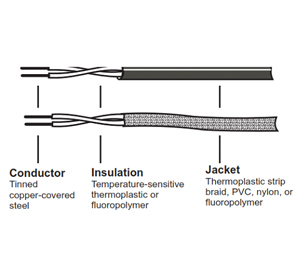
LHS cable consists of two twisted conductors insulated with a temperature-sensitive polymer.• The cable continuously monitors heat along its length
• At the rated alarm temperature, insulation melts at that specific point
• Conductors short-circuit and trigger an alarm signal
• The exact fire location is identified for quick response
This ensures fast detection, minimal false alarms, and high system reliability.
Key Advantages of Linear Heat Sensing Cable (LHS Cable)
• Continuous heat detection along the entire cable length
• Highly resistant to dust, moisture, steam, and corrosive environments
• Ideal for harsh and outdoor applications
• Low maintenance and long service life
• Easy integration with fire alarm systems
• Accurate fire location detection
Available Temperature Ratings
Digital Linear Heat Sensing Cable (LHS cable) is available in multiple alarm temperature ratings, typically ranging from:
The correct rating depends on ambient temperature and application risk.
Applications of Linear Heat Sensing Cable (LHS Cable)
LHS Cable / LHDC Cable are widely used in:

Cable trays & tunnels

Conveyor Belts

Power Plants & Substations

Battery Rooms

Warehouses & Cold Storage

Parking Garages

Oil & Gas Facilities

Escalators & elevator shafts

Solar power plants
LHS Cable vs Smoke Detector Why LHS is Preferred
| Feature | Linear Heat Sensing Cable (LHS Cable | Smoke Detector |
|---|---|---|
| Dust / humidity tolerance | Excellent | Poor |
| Outdoor Suitability | Yes | No |
| False Alarms | Very Low | High |
| Maintenance | Minimal | Frequent |
| Coverage | Continuous |
Point-based |
Frequently Asked Questions -Linear Heat Sensing Cable (LHS)
1. What is a Linear Heat Sensing (LHS) Cable? −
A Linear Heat Sensing Cable is a digital heat detection system that detects fire by monitoring temperature continuously along its entire length. When a preset temperature is reached, the cable triggers an alarm, making it ideal for early fire detection in high-risk and harsh environments.
2. How does Linear Heat Sensing Cable work? +
LHS cable consists of two twisted, polymer-insulated conductors. When the surrounding temperature reaches the rated alarm temperature, the insulation melts at that point, allowing the conductors to short circuit and signal a fire condition to the fire alarm panel or monitoring module.
3. What are the key applications of LHS Cable? +
PATOL Linear Heat Sensing Cables are widely used in:
• Cable trays & tunnels
• Conveyor belts
• Power plants & substations
• Battery rooms
• Warehouses & cold storage
• Solar power plants
• Parking garages
• Oil & gas facilities
• Escalators & elevator shafts
4. Why should I use Linear Heat Sensing Cable instead of smoke detectors? +
Linear Heat Sensing Cable is preferred where smoke detectors are unreliable due to:
• Dust, moisture, steam, or fumes
• High ambient temperatures
• Outdoor or semi-outdoor installations
LHS cables offer point-specific detection, minimal false alarms, and require very low maintenance.
5. What temperature ratings are available in LHS Cables? +
PATOL LHS cables are available in multiple alarm temperature ratings, typically ranging from:
• 70°C (datasheet)
• 90°C (datasheet)
• 105°C (datasheet)
• 178°C (datasheet)
The correct rating depends on ambient temperature and application risk.
6. Is Linear Heat Sensing Cable reusable after activation? +
No. LHS Cable is a digital (non-resettable) detection system. Once activated at a fire point, the affected cable section must be identified and replaced, ensuring precise fault location and system reliability.
7. Can LHS Cable be integrated with a conventional or addressable fire alarm system? +
Yes. Linear Heat Sensing Cable can be integrated with:
• Conventional fire alarm panels
• Addressable fire alarm systems
• Fire alarm control modules
• Dedicated LHS interface modules
Fire Knock provides complete integration support for the Linear Heat Detection System.
8. What standards and approvals does LHS Cable comply with? +
Linear Heat Sensing Cables are manufactured in compliance with international fire detection standards, making them suitable for use in industrial, commercial, and infrastructure projects. The cable is approved under the UL Standards (UL certificate)
9. How is LHS Cable installed? +
Installation is simple and flexible:
• Mounted using clips, ties, or trays
• Can follow cable routes, conveyor belts, or equipment
• No complex calibration required
Proper spacing and routing are designed as per site conditions and fire risk analysis.
10. What is the maximum length of a Linear Heat Sensing Cable zone? +
The maximum length depends on:
• Cable model
• Interface module used
• Fire alarm panel compatibility
Fire Knock assists in system design and zoning calculations to ensure compliance and performance (CONTACT: RAHUL ASHER - +91-9867064498)
11. Is Linear Heat Sensing Cable (LHS Cable) suitable for outdoor use? +
Yes. Linear Heat Sensing Cable (LHS Cable) is designed to withstand:
• High humidity
• Dust and corrosive environments
• Wide temperature variations
It is suitable for both indoor and outdoor installations.
12. What maintenance does Linear Heat Sensing Cable require? +
LHS Cable requires minimal maintenance, typically:
• Periodic visual inspection
• Continuity testing during scheduled fire audits
There are no moving parts, making it highly reliable
13. How do I select the correct LHS cable for my application? +
Selection depends on:
• Ambient temperature
• Risk category
• Installation environment
• Fire alarm system type
Fire Knock provides application-specific technical guidance to ensure correct selection.
14. Are you an authorized distributor of Linear Heat Sensing Cable in India? +
Yes. Fire Knock is an authorized distributor of PATOL Limited Products like Linear Heat Sensing Cable, Infrared Detector, etc in India, offering:
• Genuine products
• Genuine products
• System design assistance
• Timely delivery
15. How can I get a quote or technical datasheet? +
You can:
• Contact Fire Knock through the website or contact Mr. Rahul Asher - +91-9867064498
• Request a datashee
• Share your application details for a customized solution
Our technical team will assist you end-to-end.
16. Is LHS cable and LHDC cable the same? +
Yes. LHS (Linear Heat Sensing) cable and LHDC (Linear Heat Detection Cable) refer to the same type of fire detection technology.
The difference is only in terminology:
• LHS cable emphasizes the sensing function
• LHDC cable emphasizes the detection function
Both terms describe a digital linear heat detection system that activates when the preset temperature is reached at any point along the cable. In industry usage, LHS cable, LHDC cable, and Linear Heat Detection Cable are used interchangeably.
Linear Heat Sensor cable is a flexible, durable and cost-effective fixed temperature fire detector, suitable for protecting a wide range of commercial and industrial fire applications where spot-type heat detectors are unsuitable. Simple and easy-to-install, the LHS cable connects directly to the fire alarm panel initiating circuit. A short circuit along the LHS cable indicates a zone alarm condition. The LHS cable is available in a variety of operating temperatures and jackets.
The heat from a fire causes the LHS cable’s special insulation to melt at a specific temperature, allowing the two conductors to short together, thus creating an alarm condition on the fire control panel.
Application |
|||
| • | Open Area Protection |
• | Belt Conveyers |
| • | Tunnels |
• | Aircraft Hangars |
| • | Cable Trays |
• | Floating Roof Tanks |
| DIGITAL LINEAR HEAT SENSING CABLE | 70 Degree C - LHS Cable | 90 Degree C - LHS Cable | 180 Degree C - LHS Cable | |
|---|---|---|---|---|
| 1 | Type | Digital Linear Heat Sensing Cable | Digital Linear Heat Sensing Cable | Digital Linear Heat Sensing Cable |
| 2 | Voltage Rating | 150Vdc (Dielectric Test 500Vdc) | 150Vdc (Dielectric Test 500Vdc) | 150Vdc (Dielectric Test 500Vdc) |
| 3 | Maximum Ambient Temperature | 45 Degree Centigrade | 70 Degree Centigrade | 130 Degree Centigrade |
| 4 | Minimum Alarm Temperature | 60 Degree Centigrade | 80 Degree Centigrade | 170 Degree Centigrade |
| 5 | Maximum Alarm Temperature | 70 Degree Centigrade | 90 Degree Centigrade | 180 Degree Centigrade |
| 8 | Number of Cores | 2 (Two) | 2 (Two) | 2 (Two) |
| 9 | Maximum Conductor Registance per KM @ 20 Degree Centigrade | 100 Ohms per KM | 100 Ohms per KM | 100 Ohms per KM |
| 10 | Material | |||
| 11 | Conductor | Tinned Copper Coated Steel | Tinned Copper Coated Steel | Tinned Copper Coated Steel |
| 12 | Insulation | Thermoplastic (Blue and Orange) | Thermoplastic (Red & White) | Thermoplastic (Yellow & White) |
| 13 | Outher Sheath | Nylon (Black) | Nylon (Black) | Nylon (Violet) |
| 14 | Conductor Diameter | 0.9 MM | 0.9 MM | 0.9 MM |
| 15 | Insulation Material Thickness | 0.35 MM | 0.35 MM | 0.35 MM |
| 16 | Approval | UL Listed, File No. S24081 | UL Listed, File No. S24081 | UL Listed - Awaited |
| 17 | Approximate Detection Time (Small flame) | Approximately 5 seconds | Approximately 5 seconds | Approximately 5 seconds |
| 18 | Life Expectancy / Service Life | 20 Years Plus | 20 Years Plus | 20 Years Plus |
| 19 | SS Braiding Available | YES OPTIONAL | YES OPTIONAL | YES OPTIONAL |